Starbucks Plans AI‑Powered Personalized Drive‑Thru Menus
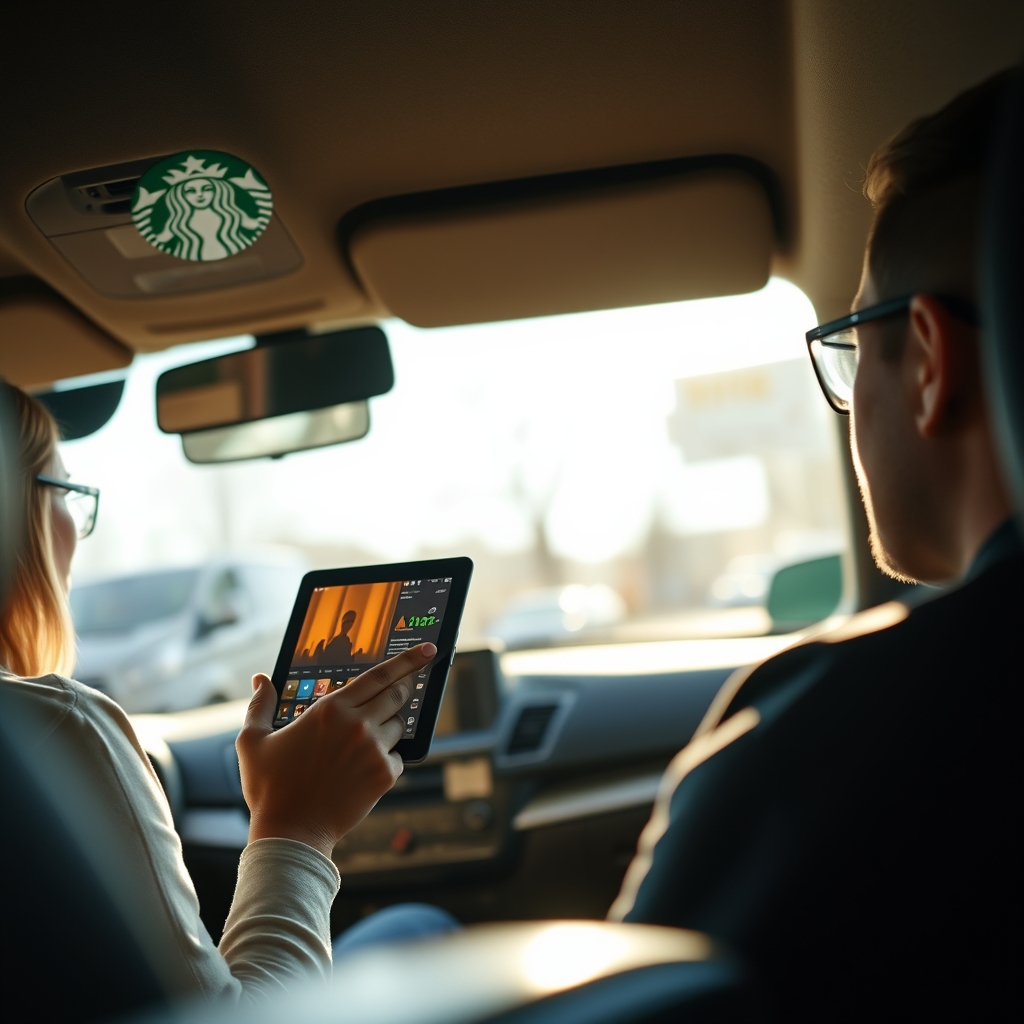
According to The Verge, Starbucks announced plans to use artificial intelligence to recognize customers as they pull up to the drive‑thru and display a personalized digital menu. The move signals a shift toward more data‑driven, frictionless ordering experiences for coffee shoppers.
What Starbucks Is Proposing
During the latest earnings call, CEO Brian Niccol said the company will explore "experiences that recognize participating customers as they arrive, present personalized digital menus, and make payment more effortless." The rollout is still in the early testing phase, and the timeline for public deployment remains undefined. In parallel, Starbucks will begin testing background AI models at the drive‑thru in 2027 to help baristas capture orders with higher accuracy and speed. The same AI engine is slated for future integration into the Starbucks app’s search and discovery functions, and the chain hints at "conversational and agentic" ordering—where a voice‑based system could guide a customer through the menu.
The coffee giant has already experimented with AI in other ways: customers can place orders through ChatGPT, and employees have access to an AI‑powered “Green Dot Assist” that answers recipe or service‑standard questions. These pilots show that Starbucks is building a suite of internal tools before exposing the technology to the public.
How the Technology Works
Recognition at the drive‑thru typically relies on a combination of data points. A common method is to match a vehicle’s license‑plate image—captured by a camera—to a stored profile linked to a loyalty account. Another approach uses the mobile app’s Bluetooth signal or a QR code displayed on the driver’s phone to identify the patron. Once the system has a confident match, an AI model selects menu items based on the customer’s purchase history, time of day, and any ongoing promotions.
The "background AI models" slated for 2027 are likely large language models (LLMs) fine‑tuned on order‑taking scripts. They can suggest completions, correct misheard items, and flag unusual requests for a human barista. By feeding real‑time speech transcripts into the model, the system can surface the most likely order before the barista finishes typing, cutting down on back‑and‑forth clarification.
On the display side, a digital menu board runs a rendering engine that swaps graphics, pricing, and layout on a per‑car basis. The engine pulls the personalized recommendation list from the AI service, then layers it over the standard menu template. Because the board is network‑connected, each car sees a unique screen without requiring separate hardware.
Comparing Industry Experiments
| Company | Recognition Method | Personalization Scope | Current Status |
|---|---|---|---|
| Starbucks | License‑plate image, app Bluetooth/QR | Menu items, pricing, suggested add‑ons | Early testing, public rollout unknown |
| McDonald’s (ArchIQ) | Loyalty‑account link, possibly phone number | Repeat‑order shortcut, limited menu tweaks | Piloted at a few drive‑thrus |
| Taco Bell | Camera‑based vehicle ID | Full menu layout, graphics, and content per car | Experimental, not widely deployed |
The table shows that Starbucks aims for the most granular personalization—individual menu items and pricing—while McDonald’s currently offers a simple repeat‑order shortcut. Taco Bell’s experiment focuses on visual changes rather than item‑level customization.
The Real Trade‑Offs: Data, Speed, and Customer Trust
Personalized menus sound convenient, but they introduce a tension between speed and privacy. Recognizing a car in seconds requires high‑resolution cameras and rapid image processing, which can increase infrastructure costs. More importantly, linking a license plate to a purchase history creates a data profile that some customers may find invasive. If the AI misidentifies a driver, the menu could display the wrong promotions, leading to confusion or even legal liability if pricing errors occur.
From an operational standpoint, baristas will rely on AI suggestions to confirm orders. While this can reduce the average transaction time, it also shifts error handling to the system. A mis‑heard order that the AI fails to flag could result in a wrong drink, increasing waste and customer dissatisfaction. Training staff to trust but verify the AI output will be essential.
Finally, the technology’s benefit is uneven across locations. High‑traffic urban stores with dense Wi‑Fi and ample budget can afford the cameras and compute nodes; smaller or rural outlets might lag, creating a fragmented experience for the brand’s loyalty members.
What to Watch and How to Prepare
If you’re a frequent Starbucks customer, keep an eye on the loyalty app for prompts about “personalized drive‑thru” features. Opt‑in settings will likely appear, allowing you to control whether your order history is used for menu customization. For businesses considering similar AI rollouts, start by mapping the data flow: capture, storage, model inference, and display. Test the recognition algorithm in low‑traffic periods to gauge false‑positive rates before scaling.
Consumers who value privacy should review the app’s privacy policy and consider disabling location‑based services if they’re uncomfortable with license‑plate tracking. Meanwhile, employees can familiarize themselves with AI‑assist tools like Green Dot Assist, as these will become the primary interface for troubleshooting the new system.
In short, Starbucks’ AI experiment could shave seconds off each order and increase upsell opportunities, but it hinges on accurate recognition, robust data safeguards, and staff readiness. Watching the pilot results over the next twelve months will reveal whether the trade‑off between convenience and privacy tilts in the chain’s favor.